

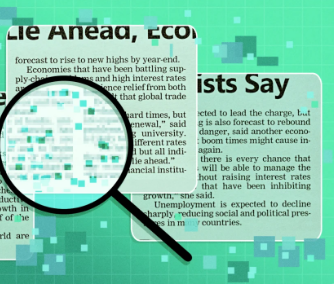
A teacher reads an essay that feels oddly polished. An editor opens a freelancer’s draft and senses something hollow beneath the smooth sentences. A marketer wonders whether the blog post in front of them was written by a person or a prompt. In moments like these, AI text detection has become the quiet gatekeeper of modern writing, and tools like the AI文本检测 are helping people answer a question that was irrelevant just a few years ago: who, or what, wrote this?
What Is AI Text Detection?
AI text detection is the practice of analyzing a piece of writing to estimate whether it was produced by a large language model or by a human. In German-speaking markets, the same technology is often called a KI Checker (short for “Künstliche Intelligenz Checker”), and the idea is identical: scan the text, measure its statistical fingerprints, and return a probability score.
The word “estimate” matters. No detector reads minds or recovers a hidden watermark. It makes an educated judgment based on patterns, and understanding those patterns is the key to using any KI Checker responsibly.
How AI Text Detection Actually Works
Perplexity: How Predictable Is the Writing?
Language models generate text by choosing statistically likely words. Because of this, machine-written prose tends to have low perplexity, meaning each next word is easy to predict. Humans are messier. We reach for odd metaphors, abandon sentences halfway, and pick words for reasons no algorithm can anticipate.
Burstiness: The Rhythm of Human Thought
Burstiness describes variation in sentence length and structure. A person might follow a sprawling, comma-laden sentence with a three-word punch. Models often default to an even, metronomic rhythm. Detectors measure this flatness as another signal.
Classifier Models and Semantic Patterns
Modern tools go further, using trained classifiers that compare your text against enormous samples of known human and machine writing. They look at vocabulary distribution, transition habits, and structural tidiness. A well-built KI Checker combines these signals rather than relying on any single one.
Why Reliable AI Detection Matters
In Education
Schools and universities want to protect academic integrity without punishing honest students. Detection offers a starting point for conversation, not a verdict.
In Publishing and SEO
Search engines reward helpful, original content. Publishers who run drafts through an AI text detection tool can catch bland, templated passages early and rework them with real expertise and voice.
In Hiring and Business Communication
Cover letters, reports, and client emails increasingly pass through language models. Detection helps organizations understand how much of a document reflects a candidate’s own thinking.
The Limits You Should Know About
Honesty about weaknesses is what separates good advice from marketing. Detectors can produce false positives, flagging genuine human writing as artificial. This happens most with formal, technical, or non-native English prose, which can look statistically “predictable” even when a person wrote every word. They can also miss heavily edited AI text.
So treat a score as evidence, not proof. Consider these habits:
- Run more than one check and compare the results.
- Read the flagged passages yourself instead of trusting a single percentage.
- Look for context, such as drafting history, notes, or earlier samples of the author’s work.
- Never base a serious decision, like a failing grade or a rejected job application, on a detector alone.
Writing That Stands Out in an AI World
The best defense against being mistaken for a machine is writing like a specific human. Include first-hand experience, concrete details, and opinions you are willing to defend. Vary your rhythm. Use examples only you could give. Readers and detectors alike respond to texture, and texture is hard to fake.
Used well, AI can still be a brilliant assistant for brainstorming and outlining. The goal is not to avoid the technology but to stay transparent about it and keep your own judgment at the center.
Conclusion: Detection Is a Tool, Not a Judge
AI text detection is neither magic nor menace. It is a probabilistic tool that works best when paired with human attention and fair-minded context. Whether you search for an AI detector in English or a KI Checker in German, the principle holds: use the score to ask better questions, not to end the conversation. For German-speaking users, the Isgen KI Checker offers a straightforward way to start.
About Isgen
Isgen is an online platform built to help writers, students, educators, and content teams understand and refine the text they work with. Its AI detection tools analyze writing for machine-generated patterns and present results in a clear, accessible way, supporting multiple languages so users around the world can check their content with confidence. Whether you are verifying an essay, auditing a blog post, or simply curious about how your writing reads, Isgen aims to make the process fast, transparent, and practical.
