LinkedIn has become one of the most effective platforms for B2B marketing, professional networking, and lead generation. However, creating LinkedIn advertisements that attract attention and generate meaningful results can take considerable time and effort. Marketers need engaging visuals, persuasive copy, appropriate targeting, and consistent testing to build successful campaigns.
This is where AI-powered marketing tools can make the process easier. A predis.ai LinkedIn ad can help marketers streamline the process of developing creative content, generating ideas, and preparing social media advertisements more efficiently.
What Is a Predis.ai LinkedIn Ad?
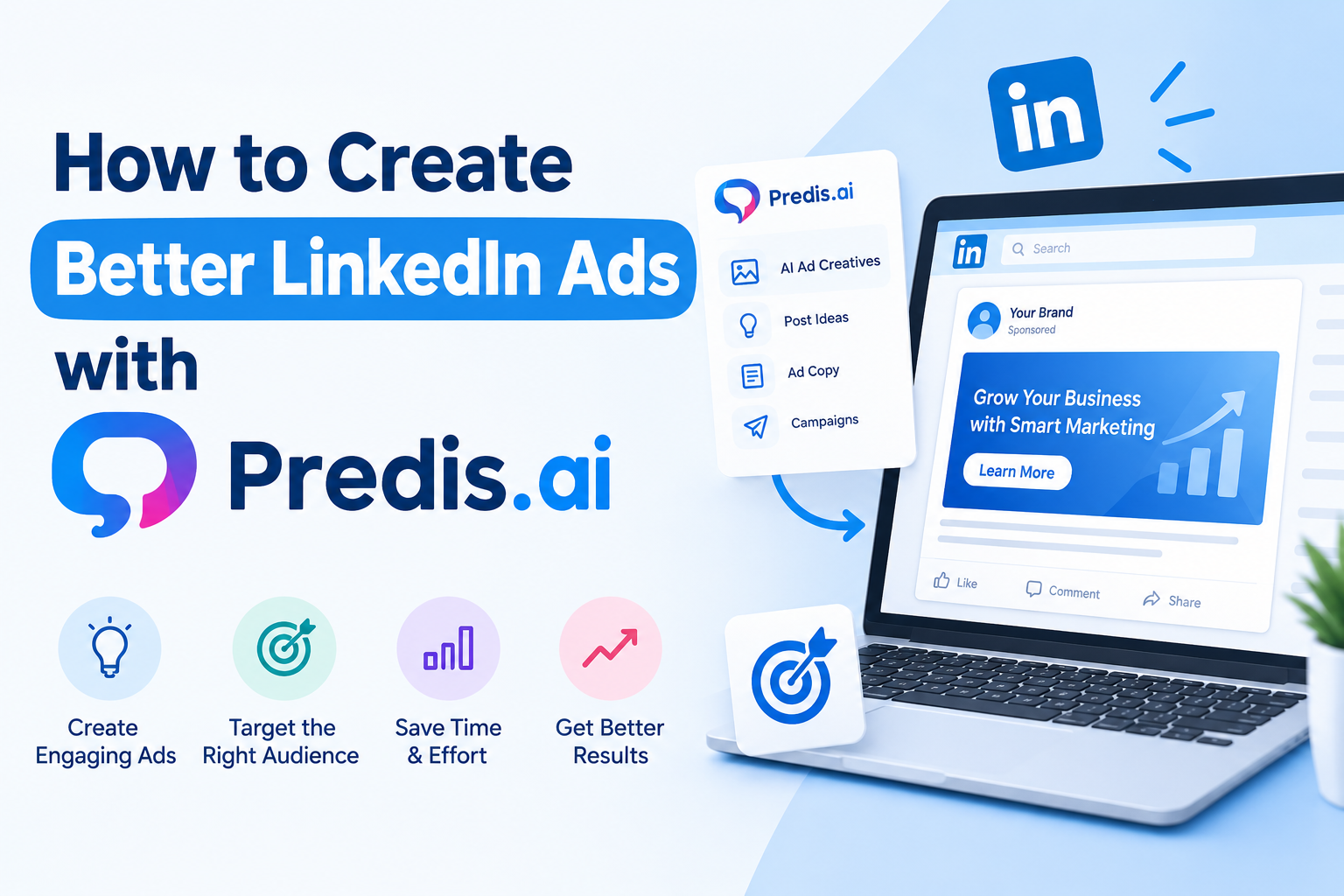
Predis.ai is an AI-powered content creation and marketing platform designed to help businesses create social media content. It can assist with generating creative concepts, captions, visuals, and other marketing assets.
When marketers use Predis.ai to develop content intended for LinkedIn advertising, the resulting creative can be adapted for professional audiences and business-focused campaigns.
A predis.ai LinkedIn ad can therefore refer to LinkedIn advertising content created or assisted by Predis.ai, particularly when AI is used to speed up the creative development process.
Why LinkedIn Ads Matter for Businesses
LinkedIn is different from many other social media platforms because its audience is primarily composed of professionals, businesses, decision-makers, recruiters, and industry specialists.
This makes LinkedIn particularly useful for:
- B2B lead generation
- Software and SaaS marketing
- Recruitment campaigns
- Professional services
- Business events and webinars
- Brand awareness
- Industry-focused content promotion
However, professional audiences can also be selective about the advertisements they engage with. Generic advertising may fail to attract attention. Strong visuals and relevant messaging are therefore important.
How Predis.ai Can Help With LinkedIn Ad Creation
Creating an advertisement usually involves several steps, including brainstorming, writing copy, designing visuals, and adapting content for different audiences.
AI tools can simplify some of these tasks.
1. Generate Creative Ideas
One of the biggest challenges in advertising is coming up with new concepts. Predis.ai can help marketers generate content ideas based on a particular topic, product, or campaign objective.
For example, a software company promoting a new business solution could develop several creative directions around productivity, cost reduction, automation, or customer experience.
This gives marketers multiple concepts to evaluate before creating the final advertisement.
2. Create Engaging Visual Content
Visuals play an important role in social media advertising. A well-designed graphic can communicate the central message of an advertisement quickly.
Predis.ai can assist in developing visual content that can then be adapted for LinkedIn campaigns. Marketers can experiment with different layouts, messages, and creative approaches instead of relying on a single design.
3. Develop Advertising Copy
The text accompanying a LinkedIn advertisement needs to communicate value quickly. A good advertisement generally explains the problem, presents the solution, and gives the audience a reason to take action.
AI can help marketers brainstorm headlines, descriptions, calls to action, and alternative versions of advertising copy.
For example, instead of creating one headline, marketers can develop several variations and compare which message best fits their campaign.
4. Save Time
Traditional content creation can require multiple people and several rounds of revisions. AI-assisted tools can reduce the amount of manual work involved in the initial creative process.
This is particularly useful for small businesses and marketing teams that need to produce multiple advertisements while working with limited resources.
Tips for Creating an Effective Predis.ai LinkedIn Ad
Using an AI tool does not automatically guarantee a successful advertising campaign. Human strategy and editing remain important.
Understand Your Target Audience
Before creating an advertisement, identify who you want to reach.
Consider factors such as:
- Job role
- Industry
- Company size
- Professional interests
- Business challenges
- Purchasing responsibilities
The more clearly you understand the audience, the easier it becomes to create relevant advertising content.
Keep the Message Focused
Avoid putting too much information into a single advertisement. Your audience should be able to understand the main message quickly.
Instead of describing every feature of a product, focus on one key benefit.
For example, a cybersecurity company could focus one advertisement on data protection and another on compliance rather than combining every feature into one creative.
Use a Strong Call to Action
A call to action tells the audience what to do next. Depending on the campaign, it could encourage users to:
- Learn more
- Download a guide
- Register for a webinar
- Request a demonstration
- Visit a website
- Contact the company
The CTA should match the purpose of the advertisement.
Maintain a Professional Style
LinkedIn audiences generally expect business-oriented communication. While advertisements can be creative, the design and language should remain appropriate for the target audience.
Use clear language, readable typography, relevant imagery, and consistent branding.
Test Different Creative Versions
One of the advantages of using AI-assisted content creation is the ability to develop multiple variations quickly.
For example, you could test:
- Different headlines
- Different images
- Short versus longer copy
- Different calls to action
- Different value propositions
Testing helps marketers understand which messages generate stronger engagement and conversions.
Rather than assuming which advertisement will perform best, use campaign data to guide future creative decisions.
Common Mistakes to Avoid
Even with AI assistance, several mistakes can reduce the effectiveness of a LinkedIn advertisement.
First, don’t publish AI-generated content without reviewing it. AI-generated copy may require editing for accuracy, tone, grammar, and brand consistency.
Second, avoid generic messaging. A message written for everyone may not strongly appeal to anyone. Adapt the advertisement to a specific audience.
Third, don’t focus only on appearance. Attractive visuals are useful, but the advertisement also needs a clear business objective.
Finally, don’t stop after creating one version. Advertising performance can vary significantly between different creative approaches, so testing and optimization are important.
Predis.ai and the Future of AI-Powered Advertising
AI is increasingly becoming part of the digital marketing workflow. Instead of replacing marketers completely, AI tools can assist with repetitive and creative tasks, allowing marketing teams to spend more time on strategy, audience research, campaign planning, and performance analysis.
A predis.ai LinkedIn ad can be part of this workflow by helping marketers move from an initial idea to usable advertising content more efficiently.
The most effective approach is to combine AI assistance with human judgment. Marketers should provide the strategy, understand their customers, review the generated content, and use real campaign data to improve future advertisements.
Final Thoughts
LinkedIn advertising can be a valuable component of a B2B marketing strategy, but successful campaigns require more than simply publishing an advertisement. Audience targeting, messaging, visual design, calls to action, and continuous testing all contribute to campaign performance.
Using Predis.ai can help simplify parts of the creative process and make it easier to develop multiple advertising concepts. However, marketers should always review and customize AI-generated content before publishing it.
Ultimately, the goal of a predis.ai LinkedIn ad should not simply be to create attractive content. It should communicate a clear message to the right professional audience and encourage a meaningful next step.