

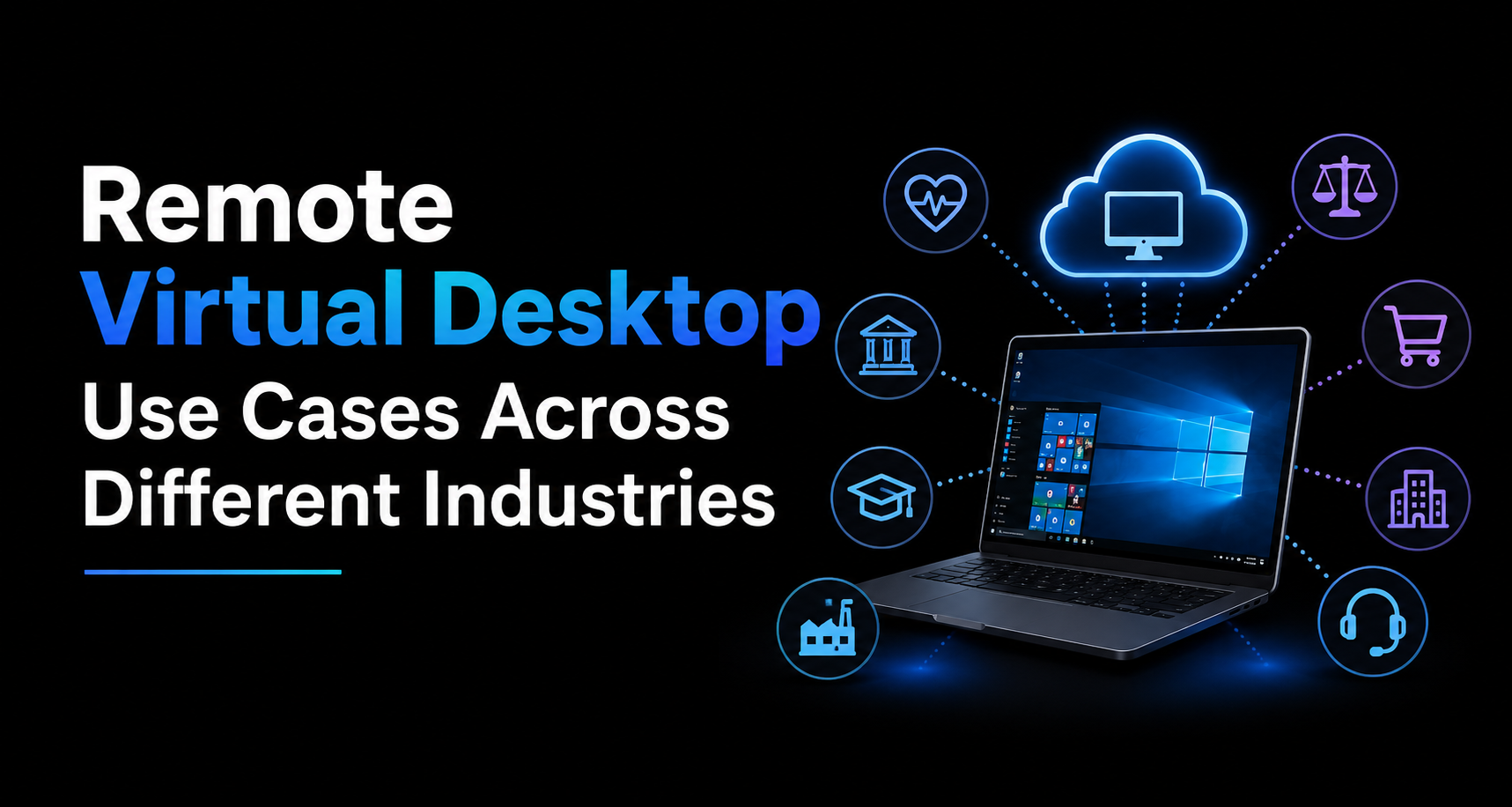
As businesses continue to embrace digital transformation, the demand for secure, flexible, and scalable IT solutions has never been higher. Organizations across industries are moving away from traditional desktop environments in favor of cloud-based solutions that empower employees to work from anywhere while maintaining enterprise-grade security. One of the most effective technologies driving this transformation is the remote virtual desktop.
A remote virtual desktop provides users with a complete desktop environment hosted in the cloud. Employees can securely access business applications, files, and resources using virtually any internet-connected device, whether they’re working from home, traveling, or collaborating across multiple office locations. Beyond supporting remote work, virtual desktops simplify IT management, reduce infrastructure costs, and improve business continuity.
Let’s explore how different industries are leveraging remote virtual desktop technology to improve productivity, security, and operational efficiency.
1. Healthcare
Healthcare organizations manage highly sensitive patient information while ensuring that medical professionals have quick and reliable access to electronic health records (EHR), imaging systems, and healthcare applications.
A remote virtual desktop allows doctors, nurses, and administrative staff to securely access patient records from hospitals, clinics, or remote locations without storing confidential data on local devices. This centralized approach helps healthcare providers comply with industry regulations while minimizing the risk of data breaches.
Benefits for Healthcare
- Secure access to patient records
- HIPAA-compliant data management
- Simplified IT administration
- Support for telemedicine services
- Improved disaster recovery
Healthcare professionals can continue delivering quality patient care regardless of their physical location.
2. Accounting and Financial Services
Accounting firms and financial institutions rely heavily on applications like QuickBooks, Sage, Microsoft Excel, tax preparation software, and financial reporting tools.
Using a remote virtual desktop, accountants can securely collaborate with clients, access financial software remotely, and work efficiently during busy tax seasons without compromising sensitive financial information.
Key Advantages
- Secure client data access
- Centralized accounting applications
- Faster collaboration among team members
- Simplified software updates
- Reduced hardware costs
Financial organizations also benefit from encrypted data transmission and centralized backups that reduce operational risks.
3. Legal Services
Law firms handle confidential client records, legal documents, contracts, and case files daily. Secure access and document management are essential for maintaining client trust.
Virtual desktops enable attorneys and legal staff to work from courtrooms, client offices, or home while maintaining secure access to legal databases and case management systems.
Legal Industry Benefits
- Secure document storage
- Easy collaboration between attorneys
- Controlled file permissions
- Centralized legal software
- Business continuity during emergencies
Law firms can also onboard new employees quickly since applications and desktop environments are centrally managed.
4. Education
Educational institutions increasingly support hybrid and online learning environments. Students, faculty, and administrators require reliable access to educational software, research tools, and learning management systems.
Virtual desktops make computer labs available remotely, allowing students to use specialized software without requiring expensive personal computers.
Educational Advantages
- Equal access to learning resources
- Virtual computer labs
- Simplified software deployment
- Lower hardware investment
- Secure student data
Faculty members can conduct classes from virtually anywhere while maintaining consistent access to academic resources.
5. Manufacturing
Manufacturing companies operate multiple facilities, warehouses, and production sites. Managers, engineers, and production teams require access to inventory systems, ERP platforms, design software, and production reports.
Cloud-hosted desktops help manufacturing businesses centralize operations while enabling remote monitoring and collaboration across locations.
Manufacturing Benefits
- Access to ERP systems from anywhere
- Improved production monitoring
- Faster collaboration between facilities
- Centralized engineering applications
- Enhanced supply chain visibility
IT departments can also deploy updates and security patches across all users simultaneously.
6. Engineering and Architecture
Engineering firms rely on resource-intensive applications like AutoCAD, Revit, SolidWorks, and BIM software.
Instead of purchasing expensive workstations for every employee, organizations can leverage cloud-powered desktops with high-performance computing resources.
Key Benefits
- High-performance cloud workstations
- Remote collaboration on large design files
- Faster project delivery
- Reduced workstation costs
- Secure intellectual property protection
Engineers can continue working efficiently regardless of device limitations.
7. Retail and E-commerce
Retail businesses manage inventory, customer relationships, sales reporting, and supply chain operations across multiple locations.
Virtual desktop infrastructure enables store managers, regional supervisors, and headquarters staff to access centralized business systems securely from any location.
Retail Benefits
- Centralized inventory management
- Secure POS application access
- Remote business reporting
- Improved customer service
- Simplified employee onboarding
Retailers can also quickly scale operations during seasonal demand without significant IT investments.
8. Government Agencies
Government departments require secure access to confidential records while maintaining strict compliance standards.
Cloud-hosted virtual desktops provide centralized security, identity management, and controlled access for employees working in different departments or remote locations.
Government Advantages
- Enhanced cybersecurity
- Centralized user management
- Secure document access
- Compliance support
- Faster disaster recovery
These capabilities help improve operational resilience while protecting sensitive government data.
9. Real Estate
Real estate professionals frequently work outside traditional offices. They need access to CRM systems, contracts, listing platforms, financial documents, and customer information while meeting clients.
Virtual desktops allow agents to securely access all required business applications using laptops, tablets, or smartphones.
Real Estate Benefits
- Access listings from anywhere
- Secure document management
- Improved client responsiveness
- Better collaboration with brokers
- Centralized transaction records
This flexibility enables agents to close deals faster while maintaining data security.
10. Small and Medium Businesses (SMBs)
Small businesses often operate with limited IT budgets but still require enterprise-grade security and reliability.
A remote virtual desktop eliminates the need for expensive server infrastructure while providing scalable computing resources that grow alongside the business.
SMB Benefits
- Lower IT expenses
- Reduced hardware purchases
- Easy scalability
- Automatic software updates
- Professional-grade security
Business owners can focus on growth instead of managing complex IT infrastructure.
Why Businesses Across Industries Are Adopting Virtual Desktops
Regardless of industry, organizations share common technology challenges:
- Supporting hybrid and remote work
- Protecting sensitive business data
- Reducing IT maintenance costs
- Improving disaster recovery
- Scaling infrastructure quickly
- Simplifying software deployment
- Increasing employee productivity
A remote virtual desktop addresses all of these challenges by providing centralized management, enterprise-level security, and seamless access to business resources from virtually any location.
As organizations continue embracing cloud technologies, virtual desktops are becoming a strategic investment that supports both current operations and future business growth.
Conclusion
Businesses across healthcare, finance, legal, education, manufacturing, retail, government, engineering, and many other industries are discovering the advantages of cloud-hosted desktop environments. A remote virtual desktop enables secure remote work, reduces IT complexity, strengthens cybersecurity, and improves collaboration while helping organizations control infrastructure costs.
If you’re looking for a reliable partner to modernize your IT environment, Apps4Rent offers fully managed virtual desktop hosting solutions designed for businesses of all sizes. With enterprise-grade security, high-performance infrastructure, 24/7 expert support, and scalable cloud solutions, Apps4Rent helps organizations deploy secure remote desktops that empower employees to work efficiently from anywhere while keeping business-critical data protected.
Frequently Asked Questions
1. What is a remote virtual desktop?
A remote virtual desktop is a cloud-hosted desktop environment that allows users to securely access their operating system, applications, and files from any internet-connected device.
2. Which industries benefit the most from remote virtual desktops?
Healthcare, accounting, legal services, education, manufacturing, engineering, retail, government agencies, customer support, and small businesses all benefit from improved security, flexibility, and centralized IT management.
3. Is a remote virtual desktop secure?
Yes. Most enterprise virtual desktop solutions include encryption, multi-factor authentication (MFA), centralized security policies, regular backups, and continuous monitoring to protect sensitive business data.
4. Can employees use their own devices?
Yes. Employees can securely access their virtual desktop using Windows PCs, Macs, tablets, smartphones, or thin clients without storing business data on their personal devices.
5. Why should businesses choose Apps4Rent for virtual desktop hosting?
Apps4Rent provides secure, scalable, and fully managed virtual desktop hosting with enterprise-grade infrastructure, 24/7 technical support, robust security features, and flexible plans tailored to businesses of all sizes.
