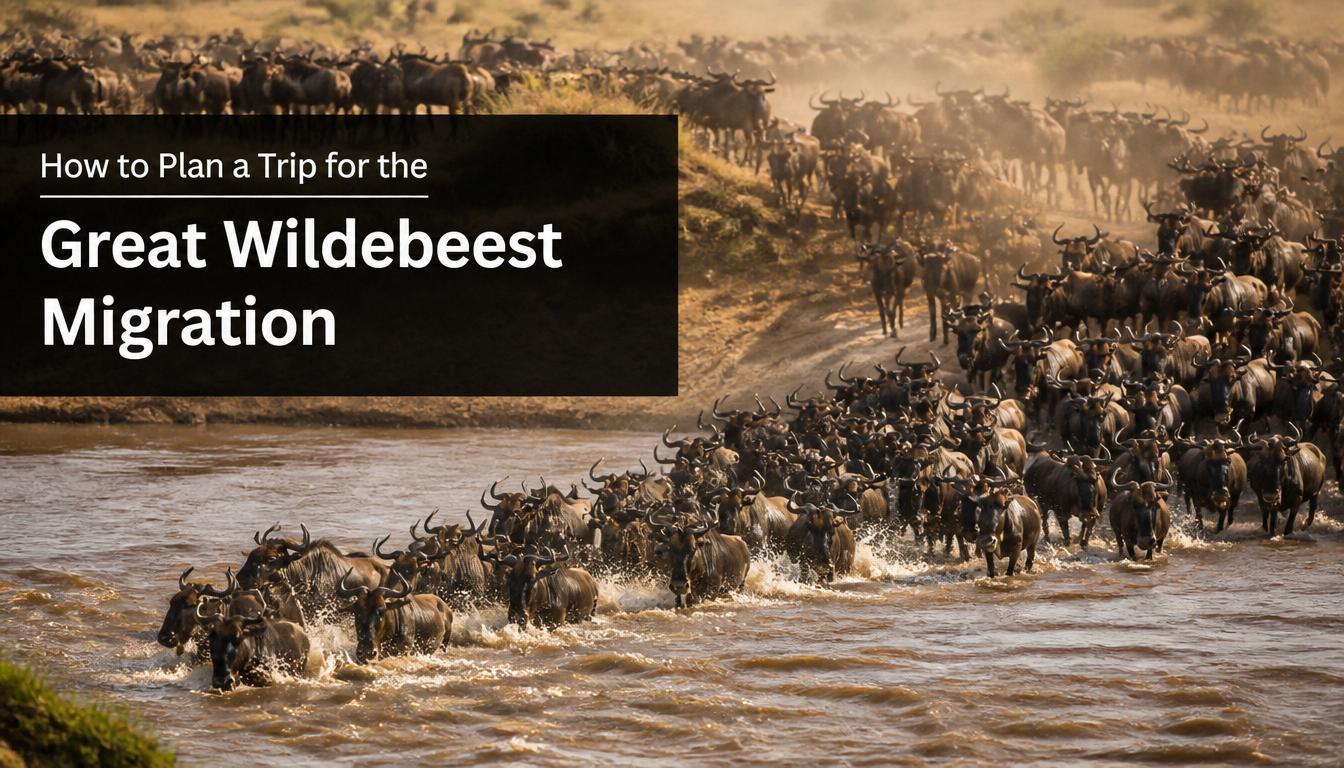
The Great Wildebeest Migration is one of the most extraordinary wildlife spectacles on Earth, attracting travelers, photographers, and safari enthusiasts to East Africa every year. Planning the right trip is essential if you want to experience the most dramatic moments of this natural wonder, from river crossings to calving season in the Serengeti and Masai Mara.
A well-planned safari ensures you are in the right place at the right time to witness the movement of over a million wildebeest, zebras, and gazelles across the Serengeti–Mara ecosystem.
Understanding the Great Wildebeest Migration
The Great Wildebeest Migration is a continuous, circular journey driven by rainfall and fresh grazing land. The herds move between Tanzania’s Serengeti National Park and Kenya’s Masai Mara National Reserve, following seasonal patterns.
Key highlights include:
- Calving season in southern Serengeti
- Grumeti River crossings in western Serengeti
- Dramatic Mara River crossings in northern Serengeti and Kenya
- Return journey to Tanzania during the green season
Knowing this cycle is the first step in planning your safari.
Best Time to Experience the Great Wildebeest Migration
Timing is everything when planning a migration safari. Different months offer different experiences:
January to March – Calving Season
This is when thousands of wildebeest calves are born in the southern Serengeti. It is also predator season, with frequent lion and cheetah activity.
June to July – Grumeti River Crossings
The herds begin moving north, and travelers may witness early river crossings in western Serengeti.
August to October – Peak River Crossing Season
This is the most popular time to witness the Great Wildebeest Migration in action, especially the dramatic Mara River crossings filled with crocodiles and predator encounters.
November to December – Return Migration
The herds move back toward the Serengeti as rains begin, offering fewer crowds and beautiful green landscapes.
Choosing the Right Destination
To fully experience the migration, selecting the right location is crucial:
Serengeti National Park (Tanzania)
Best for calving season, large herd movement, and wide-open savannah photography.
Masai Mara National Reserve (Kenya)
Best for river crossings and predator action during peak migration months.
Ndutu Plains
Ideal for close-up wildlife viewing during calving season.
Western Corridor (Grumeti Area)
Known for early river crossing events and fewer tourist crowds.
Types of Safari Experiences
There are several ways to experience the Great Wildebeest Migration:
Luxury Safari Lodges
Perfect for travelers seeking comfort, guided tours, and premium wildlife viewing.
Mobile Tented Camps
These camps move with the herds, offering closer access to migration hotspots.
Budget Camping Safaris
A more affordable option for adventurous travelers who want an immersive experience.
Private Guided Safaris
Ideal for photographers and travelers who want a customized itinerary.
How to Plan Your Migration Safari Step-by-Step
1. Choose the Right Travel Season
Decide whether you want to see calving, river crossings, or general herd movement.
2. Book Early
Migration season is highly popular, so accommodations fill up quickly, especially between July and October.
3. Select Key Locations
Plan your route based on herd movement patterns in the Serengeti–Mara ecosystem.
4. Hire an Experienced Safari Operator
A knowledgeable guide increases your chances of witnessing key migration events.
5. Prepare Travel Essentials
Bring binoculars, a high-quality camera, lightweight clothing, and travel insurance.
Safari Tips for the Best Experience
- Stay flexible with your itinerary
- Choose camps close to migration routes
- Travel during dry season for better wildlife visibility
- Wake up early for the best animal activity
- Keep extra days in your schedule for unexpected sightings
Common Mistakes to Avoid
Many travelers miss key migration moments due to poor planning. Avoid these mistakes:
- Booking too late during peak season
- Ignoring seasonal movement patterns
- Staying in fixed lodges far from migration routes
- Not consulting experienced safari planners
Proper planning is essential to fully experience the Great Wildebeest Migration.
Final Thoughts
Planning a safari for the Great Wildebeest Migration requires timing, flexibility, and the right destination choices. Whether you want to witness dramatic river crossings or the calving season in the Serengeti, understanding the migration cycle helps you create a once-in-a-lifetime travel experience.
With careful preparation, expert guidance, and the right timing, your safari can become one of the most unforgettable wildlife adventures in the world.