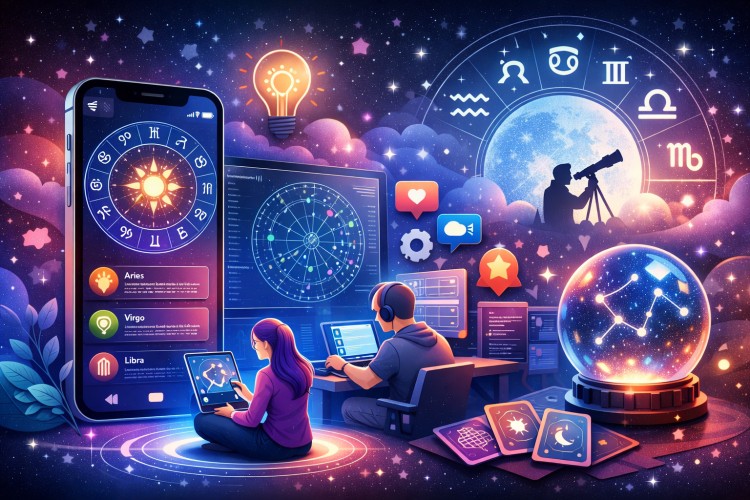
The global appetite for personalized spiritual tools has skyrocketed — and astrology apps are at the forefront of that wave. Users now prefer mobile access to daily horoscopes, birth charts, compatibility insights, and even live consultations with experts. Apps like AstroTalk have become household names by offering real‑time engagement alongside ancient astrological wisdom.
If you’re planning to build an astrology app with a similar depth and user appeal, partnering with a professional astrology app development company can help turn your idea into a successful, fully functional product. This structured guide maps out everything you need to know — from concept to launch and monetization.
1. Why Astrology Apps Are in High Demand
Astrology apps aren’t just entertainment — they are part of a broader trend toward personalized spiritual and wellness tools. Modern users seek convenience, interactivity, and precise insights from apps that combine ancient astrological wisdom with the latest mobile technology.
Partnering with a trusted astrology app development company ensures your app integrates features that meet real user expectations, including on-demand astrology app development for live consultations and personalized recommendations.
Astrology + Tech = Future Growth
• Personalization and AI: Using AI, apps can analyze user data like birth details and patterns to deliver customized daily predictions.
• Interactive Experiences: Technologies like AR and voice assistants are being leveraged to enrich user engagement.
• Health Integration: Some astrology solutions are exploring wearable integrations for holistic insights.
Astrology apps have also found traction globally, with demand expanding beyond traditional markets into wellness, lifestyle, and mindfulness categories.
2. Market Research & Competitive Analysis
Before building your app, you must study the market and competitors such as AstroTalk, AstroSage, Co‑Star, and others. Analyze what features they offer, how they retain users, and where they fall short.
Understand Your Users
Identify your target demographic — age group, interests, cultural expectations, and language preferences. For example, users in India may prefer Vedic astrology, Kundli, and remedies, whereas Western users might prioritize zodiac horoscopes and compatibility tests.
Learn From App Reviews
Browse reviews on the App Store and Google Play to spot user pain points or frequently requested features — this pattern recognition will help shape your roadmap.
3. Define Your Core Feature Set
The features you build will determine user satisfaction, retention, and monetization. Below are must‑have functions that successful astrology apps increasingly adopt:
Personalized Horoscopes
Deliver daily, weekly, and monthly readings based on the user’s birth details.
Birth Chart / Kundli Generation
Users enter birth date, time, and place to generate detailed charts and interpretations — a foundational astrology tool.
Compatibility Reports
Match two profiles to generate love, life, or career compatibility insights, a feature that drives social sharing and engagement.
Live Chat & Consultations
Connect users to astrologers via text, voice, or video. This feature is often included in on-demand astrology app development services to increase engagement and revenue.
AI‑Powered Predictions
Use machine learning to refine readings, tailor insights, and deliver relevant content over time.
Push Notifications
Send regular horoscope updates, reminders for planetary events, and alerts for exclusive sessions.
Gamification & Engagement Tools
Interactive quizzes, zodiac games, and streak rewards boost retention.
Multilingual Support
To tap into global and regional markets, include multi‑language UI and localized content.
Educational Content
Provide articles, blogs, or guides explaining astrological concepts to help users better understand their readings.
4. Select the Right Tech Stack
The technology stack affects performance, scalability, and cost-efficiency, especially when leveraging astrology app-development services.
Frontend Technologies
- Flutter or React Native — ideal for cross‑platform development (Android & iOS).
- Swift (iOS) and Kotlin (Android) — if you prefer native development.
Backend & APIs
- Node.js, Django, or Laravel — popular backend choices.
- Ephemeris APIs — for precise astronomical data (e.g., planetary positions) used in chart calculations.
AI & Machine Learning
- TensorFlow or PyTorch — for predictive models and personalized insights.
Real‑Time Chat/Video
- Twilio or Agora — for chats and live consultations.
Cloud Hosting & Database
- AWS, Google Cloud, or Firebase — ensure performance at scale.
- MongoDB or PostgreSQL — common database choices.
Also read here: Key Features You Should Include in a Successful Astrology App
5. UI/UX Design: The User’s First Impression
A strong UI/UX design is critical to retention and engagement. Astrology apps deal with complex information — charts, timelines, predictions — so clarity and intuitiveness matter.
Design Principles to Follow
- Clean Navigation: Minimize cognitive load with intuitive menus.
- Proper Visuals: Zodiac wheels, animation, and interactive charts make data more engaging.
- Ease of Input: Streamlined birth detail entry ensures higher user conversions during onboarding.
- Adaptive Interfaces: Design layouts that feel native across devices and screen sizes.
6. Build in Phases — Start With an MVP
Rather than launching all features at once, utilize a phased approach:
Phase 1: MVP
Kick off with core features like:
- User onboarding
- Daily horoscopes
- Birth chart generation
This reduces risk and gets your app into user hands faster.
Phase 2: Engagement Features
Add AI predictions, compatibility checks, and notifications.
Phase 3: Premium Features
Introduce live consultations, AI chatbots, advanced analytics, and community forums.
This staged rollout helps validate market demand and prioritize based on user feedback.
7. Monetization Strategies That Work
A sustainable app must generate revenue — here are popular options that successful astrology platforms use:
Freemium Model
Offer basic content for free, with advanced features behind a subscription.
Pay‑Per‑Session Consultations
Charge users only for the time they spend with astrologers via chat or video — a model that resonates well in Indian markets.
In‑App Purchases
Sell premium reports, remedies, or downloadable insights.
Advertisements & Partnerships
Partner with wellness brands or products complementary to astrology content.
Subscription Plans
Monthly or annual plans with exclusive offerings and ad‑free experiences.
8. Testing, Deployment & Launch Strategy
Before your astrology app goes live, rigorous testing ensures performance, reliability, and user trust.
Quality Assurance
Test on real devices to validate:
- Usability and performance
- Accuracy of predictions
- Stability of live chat and video consultations
Use both automated and manual testing to catch edge‑cases.
App Store Optimization (ASO)
Optimize your app’s presence on Google Play and Apple App Store with keyword‑rich descriptions, screenshots, and positive reviews.
Marketing & Growth
Utilize SEO, influencer collaborations, social media, and community forums (e.g., astrology groups) to build buzz.
Working with a professional astrology app development company ensures testing and deployment are handled efficiently, improving your app’s chances of long-term success.
Conclusion
Building an astrology app like AstroTalk isn’t just about replicating features — it’s about understanding users’ aspirations, blending ancient wisdom with modern technology, and delivering a trusted, delightful mobile experience. By following this step‑by‑step guide — from market research and feature planning to tech stack selection, phased development, and monetization — you’ll be poised to create a meaningful product that resonates with users worldwide.
If you’re ready to take your idea beyond the drawing board, a clear roadmap paired with strong execution will make your astrology app stand out in this dynamic and growing market.