

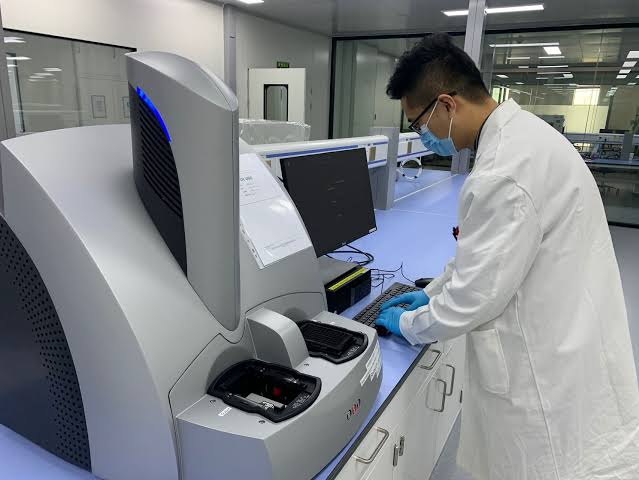
Biologics development requires precise measurements of therapeutic proteins, immune responses, and biological changes associated with treatment. Researchers must understand how these medicines behave in the body and whether they produce the intended pharmacological effects. Reliable analytical methods are essential for interpreting these findings throughout development.
Meso Scale Discovery (MSD) assays use electrochemiluminescence-based detection to measure selected biological molecules. An MSD Immunoassay can support drug quantification, biomarker evaluation, and immunogenicity testing. These applications provide analytical evidence for preclinical and clinical studies involving therapeutic proteins.
What Are MSD Meso Scale Discovery Assays?
MSD (Meso Scale Discovery) technology combines antibody-based molecular recognition with electrochemiluminescence (ECL) detection. In a typical Meso Scale Discovery assay, labeled reagents detect captured analytes and emit light when an electrical potential is applied.
A compatible instrument measures the emitted signal and interprets it according to the assay design. MSD platforms support single-analyte and multiplex measurements, allowing researchers to evaluate proteins, biomarkers, and therapeutic compounds in biological samples.
The platform’s analytical sensitivity and measurement range depend on the assay configuration, target analyte, and sample matrix.
How Does MSD Technology Support Biologics Development?
MSD assays are used across several stages of biologics development. Their applications include measuring therapeutic exposure, investigating immune responses, and evaluating treatment-related biological activity.
Pharmacokinetic Assessment
Pharmacokinetic (PK) studies investigate how therapeutic drug concentrations change over time following administration. An MSD-based PK Assay can quantify selected therapeutic proteins in plasma, serum, or other suitable biological matrices.
These measurements help researchers characterize systemic exposure and concentration-time profiles. The resulting data supports evaluations of dose-exposure relationships, drug disposition, and pharmacokinetic behavior during development.
Biomarker Evaluation
An MSD biomarker assay measures selected proteins associated with biological processes, pharmacological activity, or disease-related changes. Researchers may investigate cytokines, chemokines, growth factors, and proteins involved in cellular signaling.
Monitoring these biomarkers can help characterize biological responses following treatment. Their relevance depends on the therapeutic mechanism, sampling schedule, and relationship between the measured analyte and the intended pharmacodynamic effect.
Immunogenicity Assessment
Therapeutic proteins may trigger immune responses that lead to anti-drug antibody (ADA) formation. MSD-based electrochemiluminescence assays can be developed to detect antibodies that bind to these therapeutic molecules.
Such assays support screening, confirmation, and antibody titer determination. The resulting findings help researchers investigate immunogenicity and its potential relationship with drug exposure, pharmacological activity, and treatment response.
Why Are Multiplex MSD Assays Useful in Biologics Research?
Biological therapies can affect several signaling pathways simultaneously. Measuring multiple biomarkers may therefore provide useful information about treatment-related biological changes.
A Meso Scale Discovery multiplex assay measures several analytes in a single sample using spatially separated detection spots. This approach can reduce sample volume requirements and support broader biomarker profiling.
For example, researchers evaluating an immunomodulatory therapy may measure several inflammatory cytokines to investigate changes in immune signaling. These findings can help identify response patterns that warrant further investigation.
However, researchers must evaluate multiplex performance for each analyte because sensitivity, assay interference, and quantification ranges may differ.
Must Read: What Is an NAb Assay, and Why Is Neutralizing Antibody Testing Important in Biologics Development?
How Does MSD ELISA Technology Work?
The term MSD ELISA commonly describes ELISA-like immunoassays performed using MSD electrochemiluminescence technology. These assays employ specific binding interactions, often using capture and detection antibodies.
A distinguishing feature is the detection mechanism. MSD assays typically use electrochemiluminescent labels, while conventional enzyme-linked immunosorbent assays use enzyme-mediated signal generation.
Both approaches support protein quantification, but their analytical performance depends on the assay design and intended application. Selecting the right method requires consideration of sensitivity, sample matrix, and target characteristics.
What Is Involved in MSD Assay Development and Data Analysis?
Developing an MSD assay requires careful selection of capture and detection reagents, calibration standards, sample dilutions, and analytical conditions. Laboratories also assess potential interference from biological matrix components.
Reliable MSD data analysis involves interpreting instrument signals, fitting suitable calibration curves, and calculating analyte concentrations. Quality control results help determine whether analytical runs meet predefined acceptance criteria.
An MSD assay service may include method development, qualification or validation, sample analysis, and data reporting. The extent of analytical assessment depends on the assay’s intended use and applicable regulatory expectations.
What Factors Influence MSD Assay Reliability?
Several factors affect the quality and reproducibility of MSD assay results:
- Antibody Specificity: Suitable capture and detection reagents help minimize cross-reactivity.
- Sample Matrix: Matrix components may interfere with analyte binding or signal detection.
- Calibration Range: Standards must support reliable quantification across expected concentrations.
- Sample Stability: Appropriate processing and storage help preserve analyte integrity.
- Analytical Controls: Quality controls help monitor assay performance and identify unexpected variation.
- Assay Validation: Relevant performance assessments establish suitability for the intended application.
These considerations support dependable measurements across experimental samples and study periods.
Summary
Meso Scale Discovery assays support biologics development through therapeutic protein quantification, biomarker measurement, and immunogenicity assessment. Electrochemiluminescence detection and multiplex capabilities allow researchers to investigate selected molecular responses in biological samples.
Appropriate assay development, analytical controls, and data interpretation are essential for generating reliable results. Integrating these measurements with pharmacokinetic, pharmacodynamic, and immunogenicity findings strengthens the scientific evaluation of biological therapeutics.
