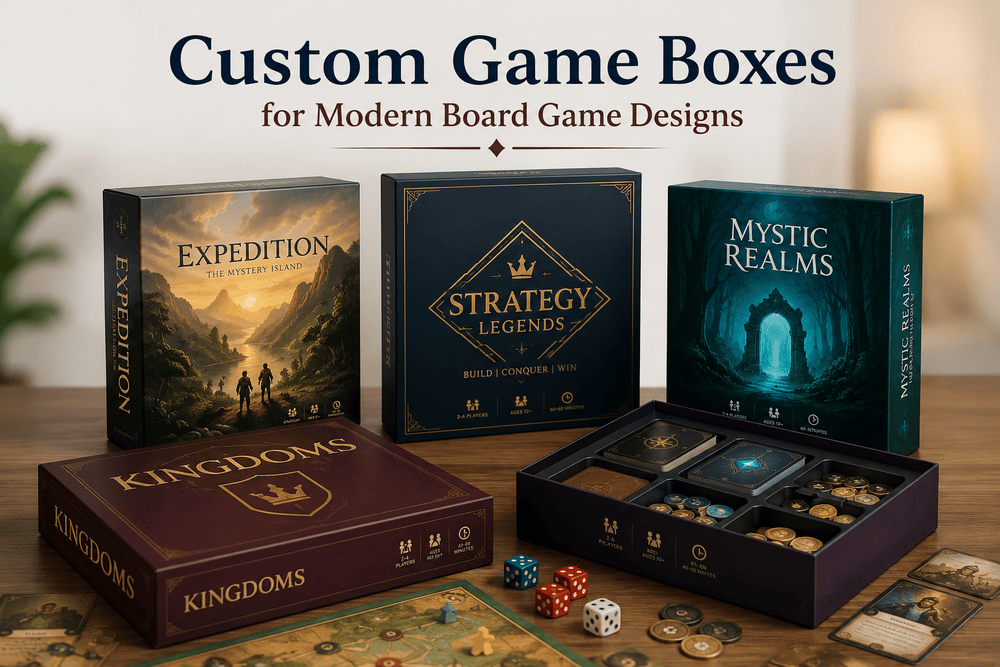
Families and friends of all kinds, hobby players, collectors, and others still enjoy playing board games today because it’s a way to spend time together without the use of a digital screen. With the rise of the board game industry, presentation is an integral aspect of a product that is noticed and remembered. The first impression a customer will have on a store shelf or online listing is of the box, and it should convey the function of the game while ensuring that the parts are kept safe. Custom game boxes offer a viable solution for manufacturers and brands, as they offer a practical solution for combining protection, organization, and clear product presentation.
Why Game Box Design Matters
Typically, a board game will have some pieces including cards, board, tokens, dice, instructions, or playing pieces. If not properly packaged, these parts can shift in transit and can be damaged or be hard to arrange.
A well-planned game box provides each aspect of the product with an appropriate location. Depending on the game’s contents, the size, shape and interior can be determined. This can help to minimize the amount of waste space and make the box easier to store.
Packaging also aids customers to know what they purchase. The game name, player information, recommended age, playing time, instructions and more important information can be displayed in a box. Comprehensible information gives the shoppers the choice to make a decision without needing to look for further information.
Creating a Design That Fits the Game
Each board game comes with its own theme and target audience. A strategy game can be played differently than a family game or a children’s activity game. The packaging should resonate with the product, but not be complicated.
Typography, illustrations, icons and product information should be used in harmony. The primary game title ought to be readable; supporting information can be presented around it. Designers should also take into account the appearance from various angles as products are generally placed on shelves where customers view the front, side, and top.
A good design doesn’t require too much graphics. An organized layout and information can sometimes better convey the product than a congested package.
Materials and Structure for Better Protection
Packaging material is important in protecting the components of a board game. Many retail packages use paperboard because it can be printed, customized and is available in various thicknesses.
A stronger board might be preferable for heavier games or products that have more parts. The box’s construction should also be in sync with its usage. If a box is opened frequently, its structure should be able to withstand repeated use.
Use inside pieces to help keep cards, tokens, dice and other pieces separate. Manufacturers can utilize compartments, trays, or even a straightforward divider, contingent upon the product. The structures keep the components organised during shipment and storage.
Printing Options for Game Packaging
Printing provides a chance to manufacturers to inscribe helpful information and brand elements directly on the package. The game can be customized and printed onto a game box with the game title, instructions, illustrations, company information, bar code, and product information.
Various printing techniques can be used in accordance with the production requirements and the desired finish. A simple design can simply be printed, whereas a more upscale board game can be further finished for a particular look.
Prior to production, the artwork should be verified for proper dimension, legibility, image quality and location of critical information. These checks can help prevent costly printing mistakes.
Building a Recognizable Brand
Packaging is also part of a game’s identity. A consistent design across multiple products can help customers recognize a company more easily. Brands can use the same logo placement, typography, or visual structure across different game releases while giving each product its own theme.
Custom Boxes with Logo are particularly useful for businesses that want their packaging to reinforce brand recognition. A logo placed clearly on the box can help customers connect the game with its manufacturer.
The packaging should also provide accurate product information. Details such as age range, number of players, estimated playing time, and basic contents can help customers understand whether the game suits their needs.
Choosing the Right Box Size
Box dimensions should be determined by the actual contents of the game. A box that is too small may damage components or make packing difficult. A box that is much larger than necessary can increase storage and shipping requirements.
Manufacturers can measure the game’s board, cards, tokens, instructions, and other components before selecting the final dimensions. The closure style should also be considered because different structures provide different levels of convenience and protection.
Efficient sizing can make packaging easier for both manufacturers and customers. It can also improve the way products are arranged during transportation.
The Role of Wholesale Game Packaging
Businesses producing games at larger volumes often need packaging in substantial quantities. Game boxes wholesale orders can help manufacturers maintain a consistent packaging supply for production runs.
When selecting a wholesale packaging supplier, businesses should consider more than the unit price. Material quality, printing accuracy, production capacity, turnaround time, and packaging consistency are also important factors.
Wholesale purchasing can be especially useful when a company has several products requiring similar packaging. Standardized specifications can make future orders easier to manage.
Custom Packaging for Different Game Types
Different games require different packaging approaches. Card-based games may need compact boxes designed around decks and instructions. Board games with large playing surfaces may require wider packaging with additional internal space.
Children’s games may benefit from simple layouts and easy-to-understand graphics. Educational games can use packaging to explain learning objectives and recommended age groups. Strategy games may need space for larger boards, cards, and numerous playing pieces.
This is where Custom Packaging can provide flexibility. Instead of adapting a game to a standard box, manufacturers can develop packaging around the actual product.
How Packaging Supports the Customer Experience
The packaging experience starts before the game is opened. Customers notice the box design, read the information, and judge whether the product appears suitable for them.
Inside the box, organization becomes equally important. If components are scattered or difficult to store, the customer may find the game less convenient to use. Inserts and compartments can improve this experience by giving every component a defined location.
A practical packaging design therefore supports both product protection and everyday use. This is especially important for games that are opened and stored repeatedly.
Making Packaging More Practical
A good packaging project starts with clear planning. Businesses should identify the game’s dimensions, component count, expected production volume, target customers, and transportation requirements before finalizing the box.
The design should also account for labeling and retail requirements. Product names, barcodes, warnings, age recommendations, and other necessary details should be positioned where they can be read easily.
For brands looking to create a complete packaging solution, custom packaging boxes can be produced according to specific dimensions and printing requirements. Working from accurate measurements helps reduce changes during production.
Final Thoughts
Today’s modern board game boxes must serve more than just to carry game pieces. It should safeguard the item, arrange its components, clarify what the game is about and stand for the brand that created it. Customers can also find it easier to store and use a box that is planned out correctly.
Everything from the materials used, structural design, printing the package, and even the brand, influence the finished product. With careful planning, it’s possible for a business to have a packaging that benefits both the product and the customer, regardless of their order size, whether it’s a small game run or wholesale game boxes.
With the right structure, the information is more easily understood, and the design is practical, custom game boxes can enhance the packaging of modern board games, making it more recognizable, more convenient to play, store and play.