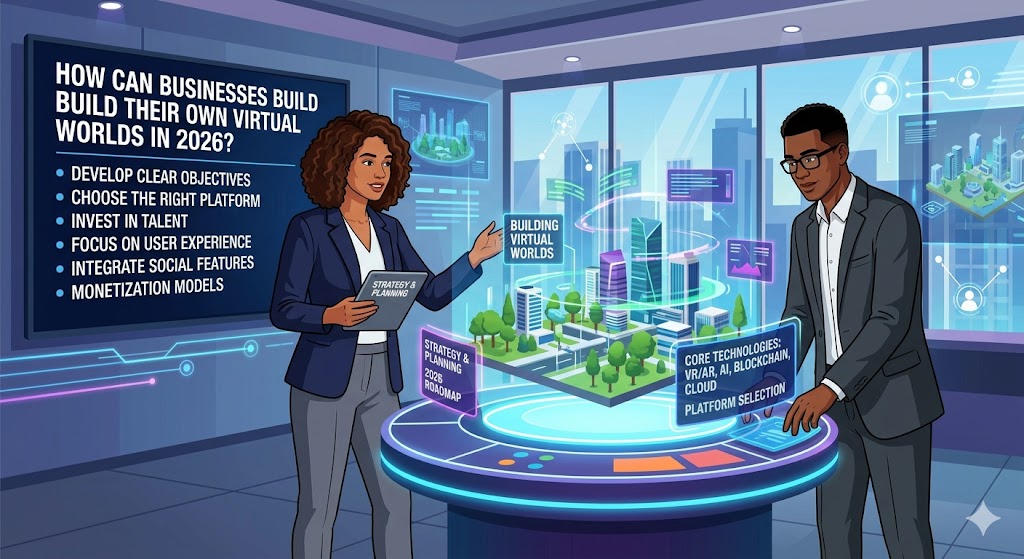
The digital world is changing fast. Immersive online environments help businesses connect with customers, employees, and communities. What once felt like science fiction is now a reality. Companies can create interactive digital spaces that mimic or improve real-world experiences.
In 2026, many organizations are looking to create their own virtual worlds. They aim to boost engagement, collaboration, marketing, and digital innovation. Users can interact through avatars. They can explore 3D worlds, attend virtual events, and buy digital goods.
To stay competitive in the next internet era, businesses must build immersive spaces. They also need to manage these spaces well. This skill is now a key priority.
Understanding Virtual Worlds in Business
Virtual worlds are lasting online spaces. Users can connect with digital objects in real time. These spaces are different from regular websites or apps. They are immersive and interactive. Often, they use 3D technologies.
Businesses are using virtual environments for various reasons. These include brand engagement, digital commerce, education, and collaboration.
Key characteristics of virtual worlds
- 3D interactive environments
- Real-time user interaction
- Customizable avatars
- Digital asset ownership
- Persistent online spaces
These features help businesses create unique experiences. They go way beyond what traditional online platforms offer.
Why Businesses Are Investing in Virtual Worlds
Companies across industries are recognizing the value of immersive digital environments. These spaces create new opportunities to connect with audiences. They help build communities and offer fresh services.
Major Business Benefits
1. Enhanced Customer Engagement
Virtual environments help customers engage with products, services, and brands. They engage users in a way that is more impactful than static websites.
2. Global Accessibility
Users can join from anywhere globally. This allows businesses to host events, meetings, or product launches without geographic limitations.
3. New Revenue Opportunities
Businesses can sell digital products, virtual experiences, NFTs, and special memberships here.
4. Brand Differentiation
Organizations that adopt immersive technologies early can gain a competitive advantage in their markets.
5. Innovative marketing opportunities
Interactive environments allow brands to create experiences that audiences remember and share.
Essential Technologies Behind Virtual Worlds
Creating immersive digital environments requires a combination of advanced technologies. These tools enable real-time interaction, visual realism, and scalable performance.
Core technologies powering virtual worlds
1. 3D Game Engines
Platforms such as Unity and Unreal Engine help developers design realistic, interactive environments.
2. Blockchain Technology
Blockchain enables secure ownership of digital assets and virtual goods.
3. Virtual Reality (VR) and Augmented Reality (AR)
These technologies let users explore digital environments in immersive ways. They can use headsets or mobile devices.
4. Artificial Intelligence
AI helps power avatars, NPCs (non-player characters), and personalized user experiences.
5. Cloud Infrastructure
Cloud systems make virtual environments available and scalable for many users at once.
A professional metaverse development company uses these technologies. They create scalable, high-performance virtual environments for businesses.
Steps to Build a Virtual World for Your Business
Creating an immersive digital environment requires strategic planning and technical expertise. Businesses must focus on user experience, platform performance, and long-term scalability.
1. Define the Purpose of Your Virtual World
Before building anything, businesses must identify their goals.
Common objectives include:
- Virtual product showrooms
- Online events and conferences
- Interactive training programs
- Virtual marketplaces
- Brand engagement spaces
A clear purpose ensures that the virtual environment aligns with business goals.
2. Design the User Experience
User experience is one of the most critical aspects of a virtual environment. When partnering with a leading metaverse development company, businesses must ensure the platform is intuitive and engaging. If users find navigation confusing, they may lose interest quickly, and limited interactions can discourage them from exploring further.
Important UX elements include:
- Simple navigation systems
- Interactive environments
- Realistic avatars
- Clear user onboarding
- Mobile and VR compatibility
A well-designed experience encourages users to explore and return to the platform.
3. Build immersive 3D environments
The visual environment is what makes a virtual world feel alive. Businesses should invest in high-quality 3D design that reflects their brand identity.
Examples of immersive environments include:
- Virtual malls
- Digital offices
- Interactive classrooms
- Entertainment venues
- Gaming worlds
Pro developers often use top-notch rendering tools and design frameworks. These help them create realistic environments.
4. Integrate Social Interaction Features
A virtual world becomes meaningful when users can interact with one another.
Key social features include:
- Voice and text chat
- Avatar customization
- Group activities
- Virtual meetings
- Live events
These interactions help build communities and keep users engaged within the platform.
5. Add digital commerce capabilities
Many businesses are using virtual environments to create new revenue streams.
Examples of monetization options include:
- Virtual product sales
- Digital collectibles
- Event tickets
- Exclusive experiences
- Subscription memberships
Blockchain integration can also enable users to securely own and trade digital assets.
6. Ensure scalability and performance
Virtual environments need to support thousands of users simultaneously. They must also keep performance at its best.
Businesses should focus on:
- Cloud hosting infrastructure
- High-performance servers
- Security systems
- Data protection
- Cross-platform compatibility
A reliable infrastructure ensures smooth experiences for all users.
Industries Using Virtual Worlds in 2026
Many industries are using immersive environments. This change transforms how they operate and connect with audiences.
Retail
Retail brands are building virtual stores. Customers can explore products and make purchases there.
Education
Universities and training organizations use immersive environments to deliver interactive learning experiences.
Real estate
Property developers showcase virtual tours of homes and commercial spaces.
Healthcare
Medical institutions use immersive platforms for training and simulation.
Entertainment
Gaming, concerts, and digital events are gaining popularity in virtual environments.
Challenges Businesses Should Consider
Immersive environments provide great opportunities. But businesses should think about possible challenges before starting their platforms.
Common challenges include
- High development costs
- Technical complexity
- User adoption barriers
- Security risks
- Content moderation requirements
Experienced developers can help businesses tackle these challenges more effectively.
Best Practices for Building Successful Virtual Worlds
To succeed in immersive environments, businesses should prioritize user value, scalability, and innovation.
Key best practices
- Focus on user engagement and community building
- Focus on intuitive design and navigation
- Keep environments interactive and dynamic
- Continuously update features and experiences
- Use data analytics to improve user behavior insights
Organizations that quickly adapt to new technologies will succeed in immersive digital ecosystems.
The Future of Virtual Worlds in Business
As technology evolves, immersive environments will be more realistic, accessible, and popular.
Future developments may include:
- AI-powered digital assistants
- Hyper-realistic graphics
- Cross-platform interoperability
- Decentralized digital economies
- Advanced VR and AR integration
Businesses exploring these environments today gain a competitive edge as immersive technologies become more mainstream. Staying updated with industry news and trends helps organizations adapt faster and innovate in the evolving digital landscape.
Conclusion
Virtual worlds are changing how we interact online. They help businesses connect with audiences in new ways. They also build communities and create fresh experiences. In 2026, many businesses will see the value of immersive digital environments. These spaces boost engagement, improve collaboration, and help grow revenue.
To build a great virtual world, create a detailed plan. Use the right tech and focus on user experience. Creating a platform that users love involves several key steps. First, you define goals. Then, you design immersive environments. Next, you integrate social features and digital commerce. Each step matters for keeping users engaged and coming back.
With the right strategy and tech skills, businesses can change their digital presence. They can join the growing immersive internet.